You finally did it. You saved up, picked out some beautiful new things, and gave your kitchen a little refresh. But now, standing back, that feeling of excitement has curdled into confusion. Instead of the collected, magazine-ready space you envisioned, it just looks… random. A cute farmhouse sign here, a sleek modern vase there, a pop of color that feels out of left field—it’s a collection of nice pieces that somehow feel like strangers at a party. If you’re wondering why your kitchen decor looks random, you’re not alone, and it’s absolutely not a reflection of your taste. This common kitchen styling mistake happens when we focus on individual ‘pretty’ items without a unifying plan, leading to a disjointed aesthetic that lacks flow. The good news? Creating cohesion isn’t about starting over or spending more; it’s about understanding the hidden design constraints you might have missed and applying a few safe, strategic fixes.
Your kitchen refresh looks random because individual pieces were chosen in isolation, without a unifying constraint like a consistent color palette or material story. The safest fix is to anchor your entire update to one dominant, permanent element you already own—like your cabinet color, countertop, or flooring. Use this “North Star” to guide every other choice, ensuring new items relate back to it through color, finish, or style, which instantly creates a more intentional and harmonious look.
The Hidden Culprits: Why Your Kitchen Pieces Feel Like Strangers
That feeling of a disjointed kitchen design doesn’t mean you have “bad taste.” More often, it’s a puzzle where the pieces were chosen without seeing the full picture on the box. The missing link is usually a unifying constraint—a simple, limiting rule that guides every choice and creates harmony. When this is absent, even beautiful items can look random together.
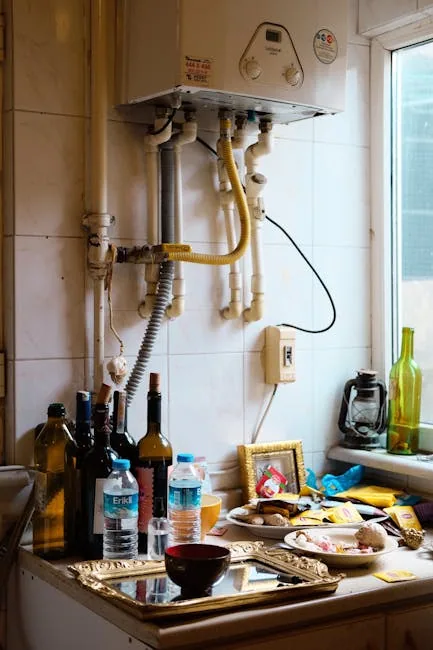
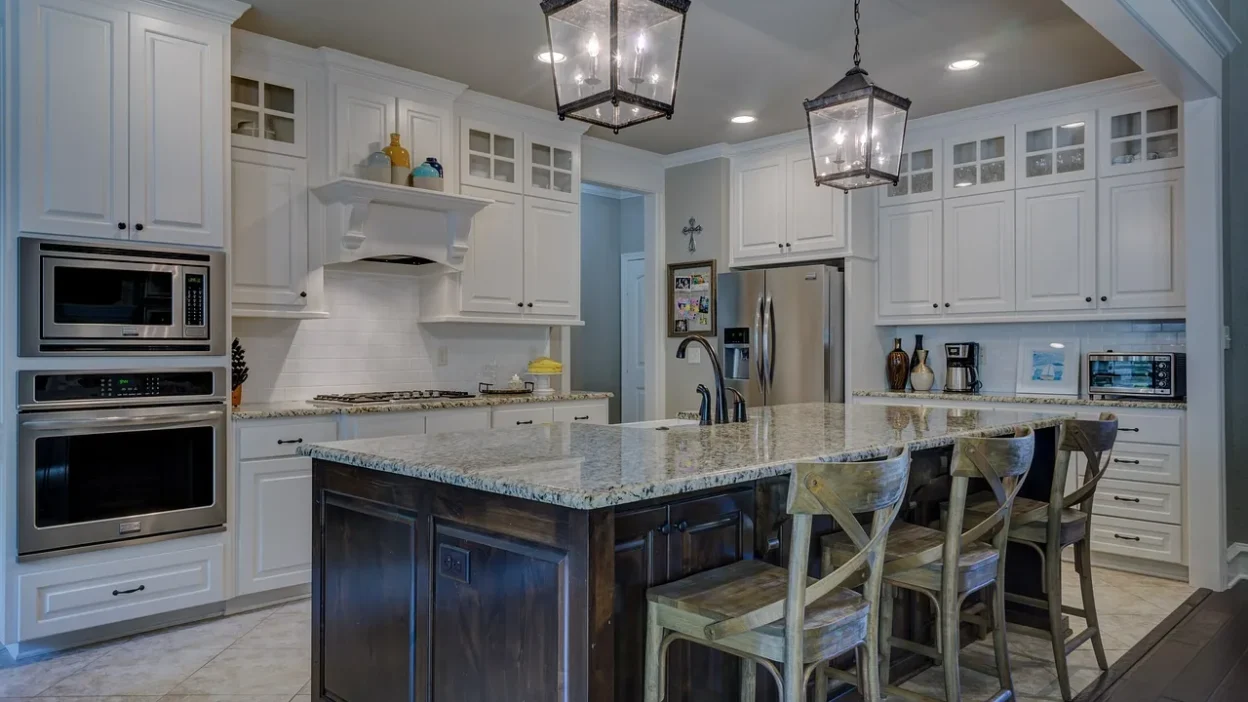
Photo by Fatih Kılıç on Pexels
1. No Anchor Element
In a well-designed space, there’s a hierarchy. One or two elements (like your cabinets or a stunning countertop) are the “stars,” and everything else plays a supporting role. If you’ve updated by adding several new “star” items—a bold rug, dramatic lighting, and colorful barstools—they all compete for attention. With no clear anchor, the room lacks a focal point and feels chaotic.
2. Material & Finish Overload
Texture and finish are silent communicators of style. A common reason your kitchen design looks disjointed is a “finish frenzy.” This happens when you have brushed nickel faucets, oil-rubbed bronze cabinet hardware, chrome appliance handles, and brass light fixtures all in one room. Each finish is lovely on its own, but together they tell a confusing story, making the space feel assembled from different kits.
3. Color Palette Sprawl
Instead of working within a defined color family, it’s easy to fall into “one more color” syndrome. You start with white cabinets and gray walls, then add terra cotta pots, a blue runner, green towels, and yellow canisters. While each addition might be pretty, the overall effect is a color palette that has sprawled out of control, leading to a lack of kitchen style cohesion.
4. Style Ambiguity
Mixing styles can be dynamic, but it requires a dominant thread. If your kitchen has farmhouse open shelving, sleek modern stools, industrial pendant lights, and coastal-themed art, the brain can’t settle on a single aesthetic. This style ambiguity is a key kitchen styling mistake that leaves the room feeling unsettled and, yes, random.
Common Kitchen Cohesion Mistakes (And How to Spot Yours)
Let’s translate those hidden culprits into specific, relatable pitfalls. Recognizing these common kitchen styling mistakes is the first step toward a more intentional look.
Mistake 1: The “One-Off Wonder”
You fall in love with a single stunning piece—a vibrant piece of art or a uniquely shaped vase—and bring it home, only to find it matches absolutely nothing. This item becomes an island, disconnected from the rest of the room’s narrative. It sticks out because it wasn’t chosen with any existing element in mind.
Mistake 2: Finish Frenzy
As mentioned, this is a top cohesion killer. Check your kitchen: count the different metal finishes on faucets, hardware, lighting, and appliances. More than two (maybe three if one is very subtle) usually signals a mismatched kitchen decor situation. The eye jumps between them instead of flowing smoothly around the room.
Mistake 3: The “Theme Park” Approach
This is over-literal theming. Wanting a “coffee shop” vibe is a great start, but filling the space with literal “COFFEE” signs, kitschy mug collections, and generic café prints can feel more like a novelty shop than a curated home. Thematic elements should be subtle and material-based (like warm wood and black steel) rather than literal.
Mistake 4: Lighting Inconsistency
Lighting is jewelry for your kitchen. A crystal chandelier over the island, minimalist track lighting over the sink, and a rustic wagon wheel fixture in the eating nook create a jarring visual conflict. These fixtures “fight” each other, breaking the visual flow and making the ceiling plane feel as disjointed as the counters.
Your Safest Cohesion Fix: The ‘North Star’ Method
The simplest, most foolproof path out of randomness is to choose one “North Star.” This is a single, dominant, and preferably permanent element already in your kitchen. It becomes the constraint that guides every other decision, providing a clear answer to the question of why my kitchen decor looks random and how to fix it.
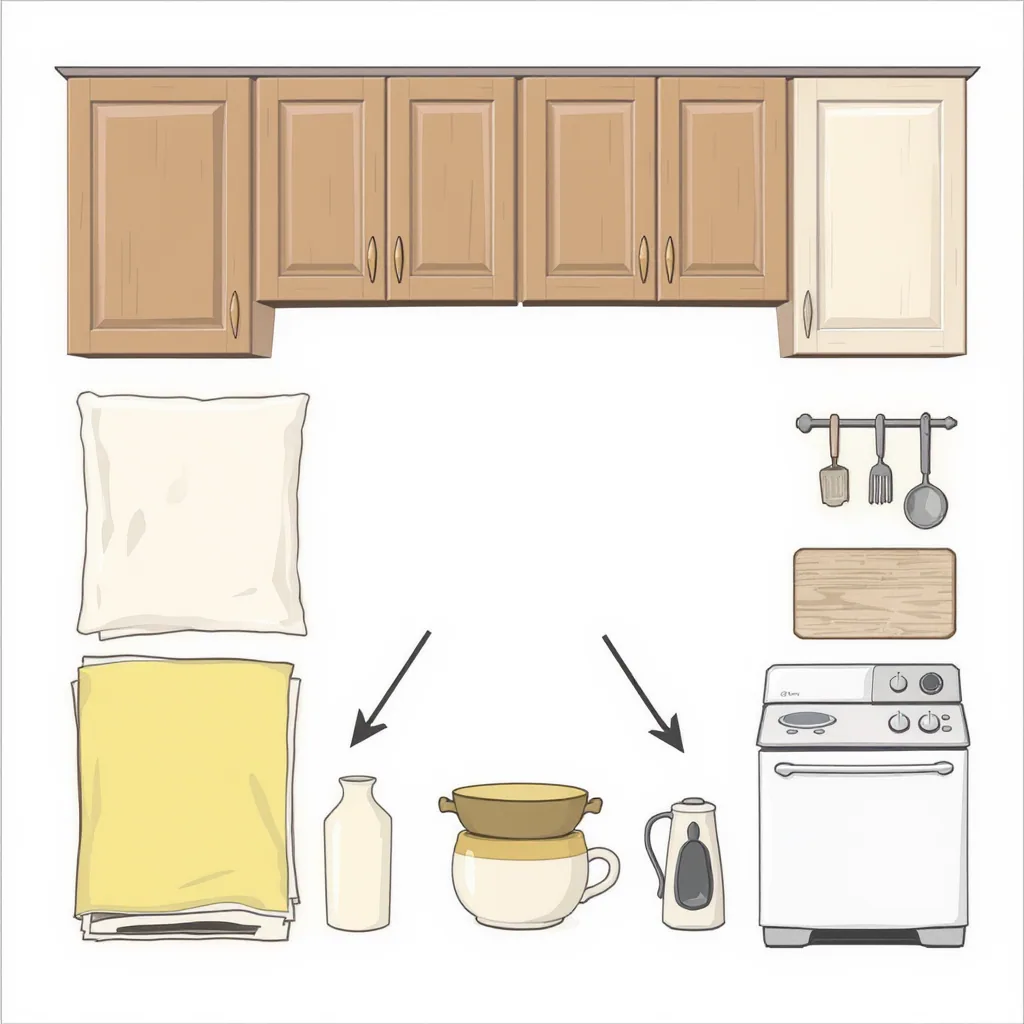
Step 1: Identify Your North Star. Look at the biggest, hardest-to-change features. This is usually your cabinet color, countertop material, or floor. If you have neutral cabinets but a striking stone countertop, the countertop is your North Star.
Step 2: Extract Its Key Traits. What defines it? Is it warm or cool? Smooth or textured? Modern or traditional? Note its primary color, secondary veins or tones, and material feel (e.g., “warm white shaker cabinet with a gray undertone and simple lines”).
Step 3: Use Those Traits as a Filter. For every new item—a rug, towel, small appliance, or piece of art—ask: “Does this relate back to my North Star?” A soap dispenser can relate through color, a basket through texture, a runner through tone. This single question is the core of countless cohesive kitchen decor ideas.
Step 4: Limit Your “Accent” Elements. Choose one accent metal finish and one (maybe two) accent colors that complement your North Star. Let these repeat intentionally. This creates layers without clutter. By anchoring to one element, you build a family of items that belong together, transforming a kitchen refresh feels chaotic into one that feels collected.
Low-Commitment, High-Impact Cohesion Boosters
You don’t need to start over. These tactical tweaks use what you have to instantly reduce visual noise and build connection.
1. The “Edit and Group” Trick
Clear your counters of all small decor and appliances. Seriously, put it all in a box. Now, only put back the essentials and a maximum of 2-3 decorative items. Group similar items together—all wooden cutting boards in one spot, a trio of ceramic canisters in another. This creates intentional vignettes instead of scattered clutter.
2. Repeat a Color Three Times
This is a classic designer trick for creating an intentional thread. If you have a green plant, find two more ways to introduce that same green hue—a tea towel, a vase, or the binding on a cookbook. This repetition tells the eye the color is a deliberate choice, not a random accident, directly addressing a kitchen styling lacks flow.
3. Unify with Textiles
Textiles are the low-commitment superhero of cohesion. Swap out your dish towels, oven mitt, and a runner for versions in a consistent color palette. Even if your hardware is mixed, a unified textile scheme (like all linen in cream and tan) lays down a calming, cohesive base layer. It’s one of the easiest cohesive kitchen decor ideas to implement.
4. Consistent Hardware
If your cabinet knobs and pulls are a mix of styles and finishes, standardizing them is a transformative, relatively easy DIY project. One consistent finish across all cabinets and drawers instantly makes the room feel deliberate and integrated. For a reliable tutorial on changing hardware, you can refer to a guide from a site like This Old House.
From Random to Refined
A kitchen that looks random isn’t a failure; it’s just a puzzle waiting for its key piece. That piece is a simple constraint—your North Star. By consciously linking every choice back to one anchor element, you move from haphazard accumulation to intentional curation. The goal isn’t a sterile showroom, but a space that feels collected, calm, and uniquely yours. Start today: look at your kitchen, pick your one dominant feature, and see the room through that new, clarifying lens.