Staring at a drawer full of cabinet hardware samples can feel paralyzing. With endless finishes, shapes, and sizes, the fear of choosing a pull or knob that clashes with your beautiful new cabinets is all too real. The secret to cutting through the noise isn’t about chasing the latest trend or picking what you like in isolation. The best way to choose cabinet pulls and knobs is to let your cabinet door style dictate the rules. Think of your door’s profile—its lines, depth, and character—as the most important constraint, a design boss that tells you what works and what doesn’t. Whether you’re debating the classic kitchen knob vs pull dilemma or seeking the perfect cabinet hardware for Shaker cabinets, starting here transforms an overwhelming decision into a clear, confident process.
The best way to choose cabinet pulls and knobs is to let your cabinet door style dictate the rules. Start by identifying your door profile—whether it’s a simple Shaker, a sleek slab, or an ornate raised panel. Then, match the hardware’s scale, finish, and silhouette to the door’s character: clean lines for modern styles, substantial pulls for traditional ones, and always prioritize proportion over passing trends.
The First Rule: Your Door Style is the Boss
Forget scrolling through thousands of hardware options based on what catches your eye. The single most effective filter for selecting cabinet pulls and knobs isn’t your personal taste—it’s the design of your cabinet doors. Their profile, lines, and overall style create a set of visual rules. Your hardware’s job is to follow those rules, not rewrite them.
Think of it this way: you wouldn’t put racing stripes on a vintage Rolls-Royce. Similarly, an ornate, crystal knob will fight against the clean lines of a modern slab door. To make a confident choice, start by identifying your door’s category:
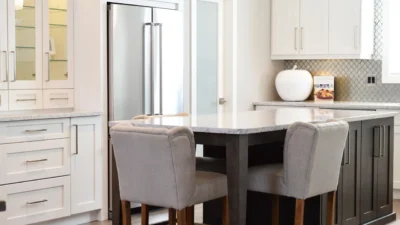
- Shaker: Defined by a flat center panel and a square, recessed frame. It’s the versatile workhorse of kitchens, bridging modern and traditional.
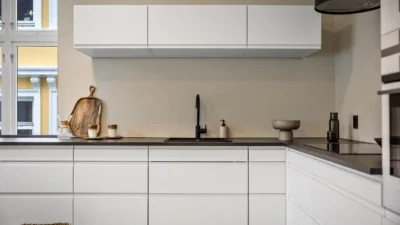
- Slab (Flat-Panel): A completely flat, handle-less door. This is the hallmark of contemporary and minimalist design.
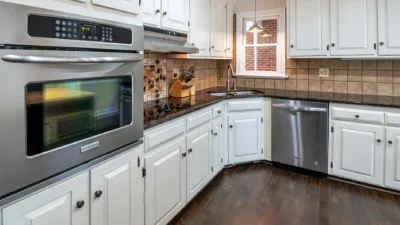
- Raised Panel: Features a center panel that is raised above the surrounding frame, often with decorative edges. Common in traditional and classic styles.
- Inset: The door sits flush within the cabinet frame, showcasing fine craftsmanship. Often found in high-end traditional or transitional spaces.
- Louvered or Detailed: Doors with slats, glass inserts, or intricate carvings. These have a strong personality that demands careful hardware pairing.
Once you’ve named your door style, you’ve done the hardest part. This identity becomes the foundation for every subsequent decision about scale, silhouette, and finish.

Photo by www.kaboompics.com on Pexels
Matching Hardware to Modern & Transitional Doors
For Shaker and slab doors, the guiding principle is clean, uncluttered lines. Your hardware should feel like a deliberate extension of the door’s geometry, not a decorative add-on. This is where the classic kitchen knob vs pull decision comes into sharpest focus.
On slab drawers and doors, bar pulls or edge pulls are almost a necessity, as there’s no recessed detail to grip. Opt for long, linear pulls—typically one-third to two-thirds the width of the drawer front. A tiny knob on a wide slab drawer looks lost and defeats the door’s sleek purpose.
For cabinet hardware for shaker cabinets, you have more flexibility. Knobs can work well on doors, especially smaller upper cabinets. For drawers, a bin pull or a simple bar pull complements the Shaker’s honest, functional aesthetic. The finish should be cohesive: matte black, brushed nickel, satin brass, or oil-rubbed bronze are all excellent choices that align with the style’s warmth or coolness. The key is to avoid anything overly fussy; let the simple beauty of the Shaker profile shine.
Choosing Hardware for Traditional & Ornate Styles
Raised panel, inset, and detailed doors carry more visual weight and craftsmanship. Here, your hardware needs to have enough presence to hold its own. Think of it as choosing jewelry for an elegant outfit—it should complement and complete the look, not disappear.
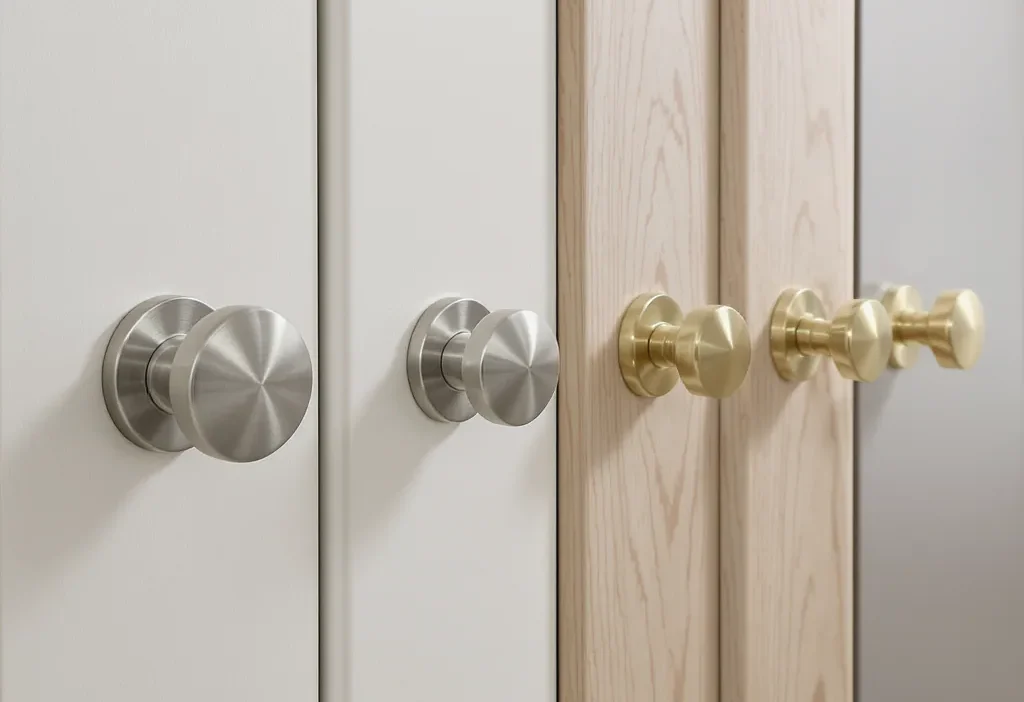
Substantial knobs with a bit of detail (like a milled edge or a rounded profile) are a safe and classic choice. For drawers, consider bin pulls, cup pulls, or even bail pulls, which have the heft and curvature to mirror the door’s dimensionality. The finish should often create continuity with other metals in the room, like your faucet or light fixtures. While you can mix metals, keeping the cabinet hardware in the same finish family creates a more intentional, designed look.
The common mistake here is choosing hardware that’s too small or too sleek. A wafer-thin bar pull on a robust raised panel door can look anemic. The hardware should feel substantial in the hand and balanced on the door, acknowledging the traditional craftsmanship.
Your Quick-Reference Decision Checklist
Before you finalize your selection, run through this short list. It consolidates the core principles of selecting cabinet hardware into actionable checks.
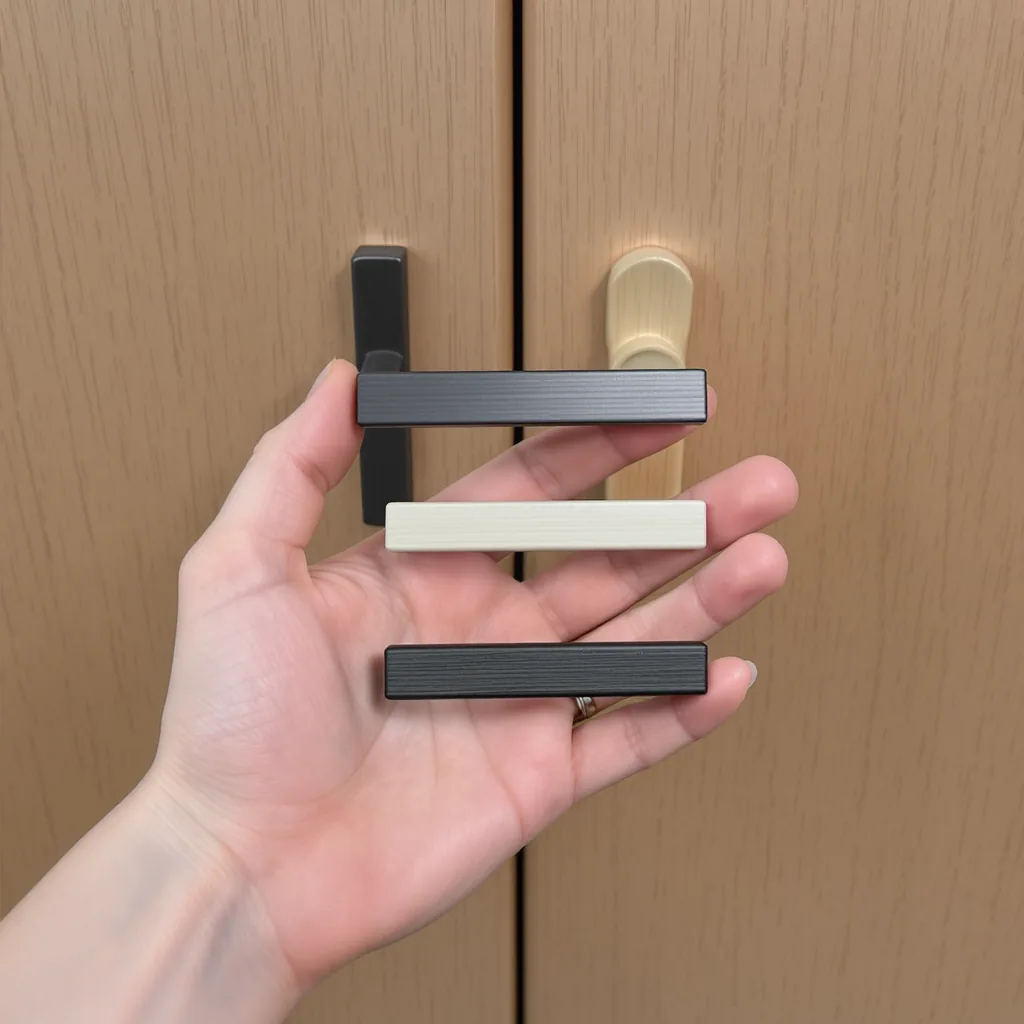
- Proportion is King: Hold a sample or picture of the pull against your drawer. Does it look balanced? A good rule is the pull length should be roughly 1/3 to 2/3 of the drawer width for a cohesive look.
- Finish Cohesion: Look at your faucet, light fixtures, and appliances. Your hardware finish doesn’t have to match exactly, but it should feel like part of the same family (e.g., all warm tones like brass and copper, or all cool tones like chrome and nickel).
- Feel & Function: If possible, order a single sample. How does it feel in your hand? Is it comfortable to grip? This is especially important for pulls on frequently used drawers.
- Installation Practicality: Check the screw hole spacing (Center-to-Center or CC measurement). Ensure the pull you love will fit your drawers without crowding the edges or looking awkwardly centered.
Trust this final filter. The best choice often feels obvious once you’ve considered scale, finish, and feel.
Make Your Choice with Confidence
You now have a clear, constraint-driven framework for choosing cabinet pulls and knobs. Start with the identity of your door—that’s your non-negotiable foundation. Let its style dictate the scale and silhouette of your hardware, then refine your choice based on finish and feel. This method removes the overwhelm of infinite options and guides you to a selection that feels intentional, not accidental.
The right hardware won’t shout for attention. Instead, it will feel like a natural, integrated part of your cabinetry, elevating the entire room’s design. Identify your door style, apply these guidelines, and trust your refined choice. Your cabinets are waiting for their perfect finishing touch.