You spent the weekend painting your kitchen cabinets a beautiful new color. The paint is dry, the hardware is back on… but something feels off. The color looks flat, almost lifeless, against your walls and counters, and your kitchen feels less vibrant than you’d hoped. Before you blame the paint or consider starting over, take a breath. This is a common, and completely fixable, design hiccup. The issue isn’t that you chose the wrong shade or that the paint quality is poor. Painted kitchen cabinets often look flat because they lack visual separation from their surroundings, creating a washed-out, one-dimensional effect. It’s a simple matter of contrast—or the lack thereof. This article will walk you through exactly why this happens and, more importantly, give you the safest, most stylish fixes to add depth and dimension without ever touching a paintbrush again.
Flat-looking cabinets are almost always a contrast problem, not a paint problem. The core issue is a lack of visual separation between your cabinets, walls, and counters, which makes everything blend into a single, lifeless plane. The safest fix isn’t more paint, but introducing deliberate contrast through hardware, wall color, or lighting to create the separation and depth your kitchen needs. Painted cabinets often look flat because they lack visual contrast against surrounding surfaces like walls, countertops, and backsplashes.
The Real Culprit: It’s Not the Paint, It’s the Contrast
First, take a deep breath. The reason your painted kitchen cabinets look flat is almost certainly not due to poor paint quality or your application technique. The culprit is a fundamental design principle: contrast. When surfaces in a room lack visual separation, they visually merge, creating a washed-out, two-dimensional effect. Your beautiful new color is there; it just has nothing to play against.
Think of it like a photograph taken at noon on a cloudy day—everything is evenly lit with no shadows, so objects lack definition. Your kitchen is experiencing the same phenomenon. We perceive depth through differences in value (light vs. dark), color temperature (warm vs. cool), and texture (matte vs. glossy). If your cabinets, walls, and countertops are all similar in one or more of these areas, the entire space can feel lifeless. This lack of contrast in the kitchen is the core issue behind that disappointing flatness.
Diagnosing Your Kitchen’s Contrast (or Lack Thereof)
Before you grab a paintbrush again, let’s diagnose your specific scenario. Walk into your kitchen and ask yourself these questions. The goal is to pinpoint where the contrast is missing.
1. The Wall Test
Stand back and look at your cabinets against the wall. Are they a similar tone or color family? For example, light gray cabinets on a light beige wall, or white cabinets on a white wall. If they blend together, you’ve found a major source of the flat look. The cabinets have no “frame” to define their shape.
2. The Counter & Backsplash Blend
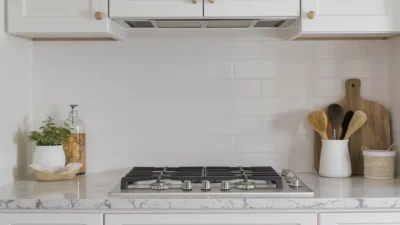
Now look horizontally. Do your countertops and backsplash visually disappear against the cabinet color? A common pitfall is pairing white cabinets with white quartz and a white subway tile backsplash. Without a break in color or material, everything flows together into a single, monotonous plane.
3. The Hardware Check
Look at your knobs and pulls. Are they small, delicate, or—most importantly—painted the same color as the cabinet? Hardware that matches too closely provides no visual “punctuation.” It fails to create the small points of interest that break up large, flat cabinet fronts.
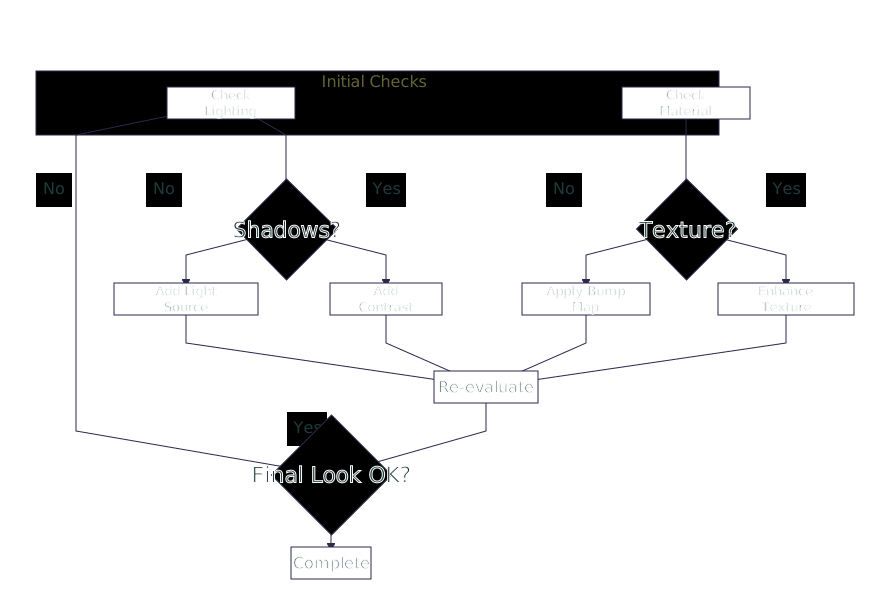
If you answered “yes” to any of these, you’ve successfully diagnosed a low-contrast scenario. The good news is that fixing it is simpler than you think.
The Safest Contrast Fixes (No Repainting Required)
The safest cabinet color styling fixes are those that add elements rather than subtract or redo major work. These are reversible, relatively low-cost, and high-impact. Start with one and see the transformation begin.
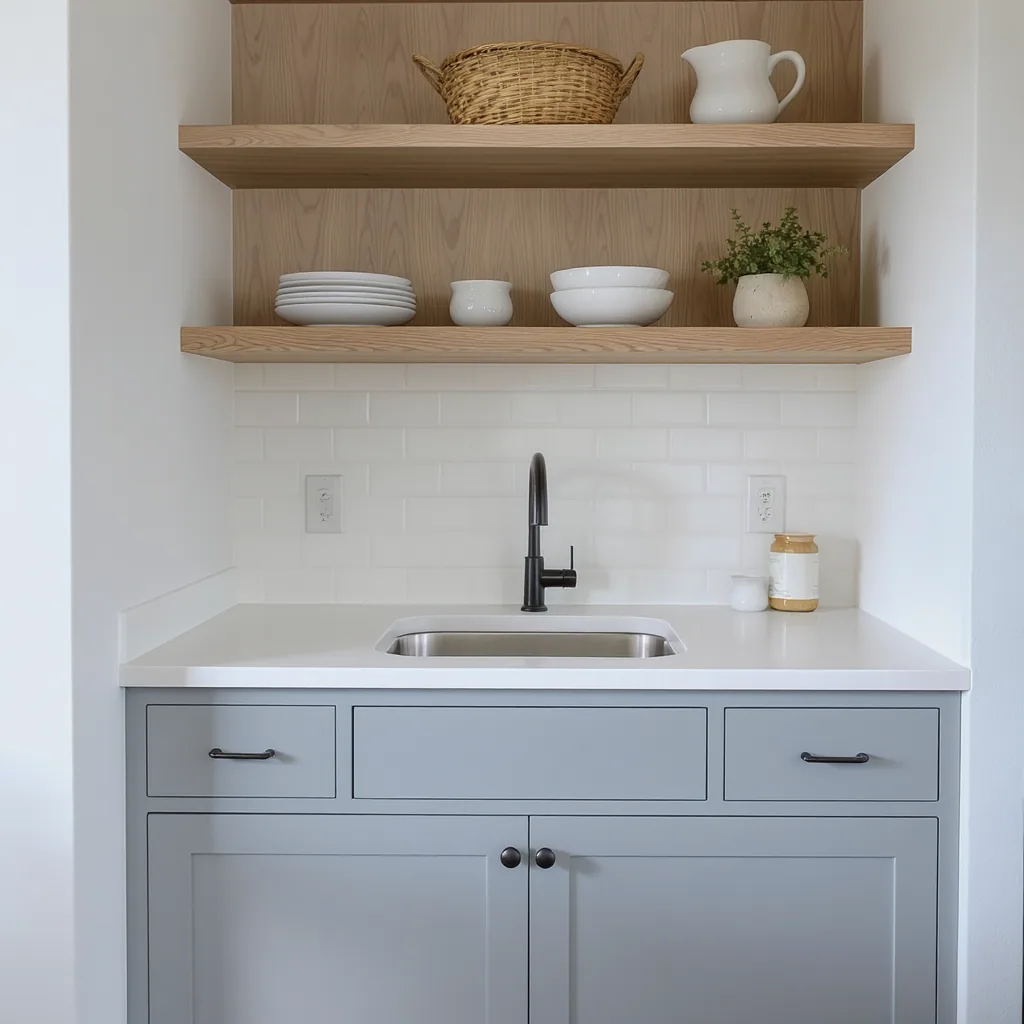
1. Swap the Hardware (The Instant Upgrade)
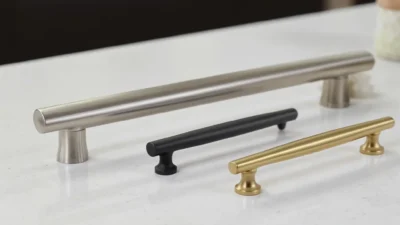
This is the fastest, most effective change. Ditch the small, matching knobs for larger, substantial pulls in a contrasting finish. If you have light cabinets, try matte black, oil-rubbed bronze, or brass. For dark cabinets, polished nickel, brass, or even a brushed chrome can pop. The goal is to create clear, deliberate dots of contrast that draw the eye and break up the flat surface.
2. Rethink the Wall Color
You don’t need to repaint the whole kitchen. Consider painting the wall between your upper and lower cabinets (the backsplash area) a contrasting color. Or, paint the wall on the opposite side of the room. Even a shift from a warm white to a cool white (or vice versa) can introduce the temperature contrast needed to make your cabinets stand out.
3. Layer with Backsplash & Counter Decor
If a full backsplash install isn’t in the cards, use what’s on your counters. A large, dark wood cutting board, a vibrant ceramic canister set, or a simple tray in a metallic finish placed against the backsplash creates a new layer. This interrupts the visual flow between counter and wall, adding dimension to cabinets by creating a mid-ground element.
4. Adjust the Lighting
Flat, overhead lighting washes out shadows and depth. Adding under-cabinet lighting casts a glow on your countertops, separating them from the darker shadow under the cabinet. A statement pendant light over an island creates a focal point and pools of light and shadow, breaking up large, evenly lit areas.
5. Introduce Open Shelving or Art
Replacing one upper cabinet door with open shelving instantly adds texture and a place for contrasting items (dishes, cookbooks). Similarly, leaning a piece of framed art on the countertop against the backsplash introduces a new color, texture, and form that disrupts the flatness.
Common Mistakes That Keep Cabinets Looking Flat
In an attempt to fix the problem, it’s easy to make choices that accidentally reinforce it. Avoid these common pitfalls on your way to a more dynamic kitchen.
Matching hardware too closely: Using brushed nickel pulls on light gray cabinets or black pulls on navy cabinets might seem safe, but it often just continues the flat effect. Aim for a clear, distinct difference in finish.
Committing to one texture: An all-matte-everything scheme (matte cabinets, matte walls, matte counters) can feel incredibly flat. Introduce a glossy tile backsplash, satin-finish hardware, or a wood element to reflect light differently.
Ignoring the “fifth wall” (the ceiling) and floor: If your ceiling and floor are similar in value to your cabinets, the room can feel like a closed box. A light, bright ceiling or a contrasting area rug/runner can help define the space and lift the cabinets visually.
Overlooking soft furnishings: Never underestimate the power of a simple, colorful runner on the floor or a textured Roman shade at the window. These elements add layers of contrast and color that pull the entire room together and away from flatness.
Your Kitchen’s New Chapter Starts With One Change
Feeling like your cabinet project failed is disheartening, but now you know the truth: it’s not a failure, it’s just unfinished. The flat look is a solvable puzzle of contrast, not a condemnation of your paint choice or DIY skills. You have a palette of safe, stylish kitchen cabinet contrast ideas at your fingertips that don’t require another grueling painting weekend.
Your very next step? Pick one fix from the list above—the one that feels most doable—and implement it this weekend. Start by ordering new cabinet pulls, or pick up a sample pot for that accent wall. Frame this not as correcting a mistake, but as the intentional, final layer of styling that elevates your kitchen from “just painted” to professionally designed. You’ve got this.