For years, a single, rigid rule has dictated kitchen design: every metal finish must match. Your faucet, cabinet hardware, and light fixtures were expected to be a perfect, monochromatic set. But what if that rule is not just outdated, but actually holding your kitchen back from feeling truly personal and designed? The truth is, intentionally mismatched kitchen finishes are a hallmark of layered, sophisticated decor, not a decorating mistake. The fear of mixing metal finishes in the kitchen often stems from a lack of clear guidelines, leading to the very kitchen hardware finish mistakes we hope to avoid. This guide will debunk the myth of perfect matching and replace it with simple, actionable principles that transform contrast from chaos into curated harmony.
The best way to mix kitchen finishes is to choose one dominant metal for your primary fixtures (like faucet and cabinet hardware) and use one or two others as accents in lighting or decor. Aim for a clear hierarchy, keep finishes within the same tone family (warm or cool), and use intentional repetition to create visual harmony. For successful mismatched kitchen finishes decor, start by selecting your main finish and then introduce a complementary accent, ensuring each appears more than once to feel deliberate.
The Big Myth: Everything Must Match
For years, the unspoken rule was that every piece of metal in your kitchen—faucet, cabinet pulls, light fixtures, even appliance handles—had to be an exact match. This “matchy-matchy” approach was less about design and more about builder-grade simplicity, ensuring a fast, foolproof installation. But here’s the fact: intentional contrast creates depth and personality. A kitchen where every finish is identical can feel flat, sterile, and, frankly, a bit dated.
High-end designers have long embraced mixing metal finishes in the kitchen to build a layered, collected-over-time look. The goal isn’t random chaos; it’s curated contrast. When you break the old rule with purpose, you move from a standard-issue space to one that reflects your personal style. The key to successful mismatched kitchen finishes decor is understanding it’s a design choice, not an accident.
What Works: The Three Rules for Harmony
To mix finishes without the mess, follow three simple, foolproof principles. These rules provide a framework that ensures your choices feel intentional and cohesive, not haphazard.
1. Establish a Dominant Finish (The 70% Rule)
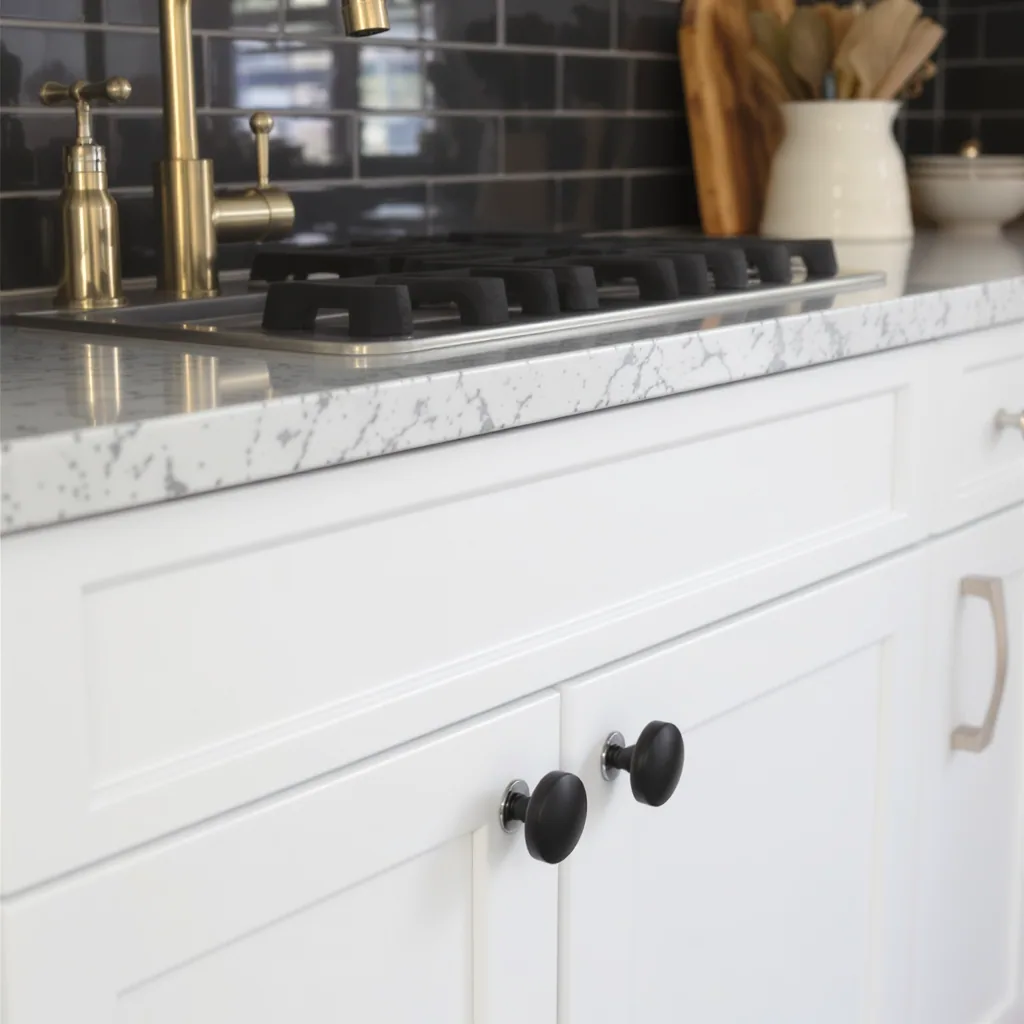
Choose one metal finish to be the star of the show. This should be the finish on your most prominent and repeated elements, typically your cabinet hardware (knobs and pulls) and faucet. Aim for this finish to cover about 70% of the visible metal in the room. This creates a strong foundation and prevents the eye from bouncing around without a place to rest.
2. Stick to a Temperature Family
Metals have undertones: warm (brass, gold, copper, oil-rubbed bronze) or cool (chrome, nickel, stainless steel, black matte). For the most harmonious kitchen finish combinations, keep all your metals within the same temperature family. Mixing a warm brass with a cool chrome can work, but it requires more finesse. For beginners, pairing warm with warm (e.g., brass and bronze) or cool with cool (e.g., chrome and black) is a safer, more unified path.
3. Use Intentional Repetition
Your accent finishes shouldn’t appear just once. If you introduce a second metal on your light fixtures, find a smaller way to repeat it elsewhere—perhaps on a pot filler, appliance handles, or even a decorative bowl on the counter. This repetition creates a visual thread that ties the whole room together, signaling that every choice was deliberate. It’s the secret to coordinating different metal finishes with confidence.
Real Kitchen Scenarios: Putting the Rules to Work
Let’s see how these rules apply in real kitchens. The goal is to solve common layout and style challenges with finish combinations that create kitchen hardware harmony.
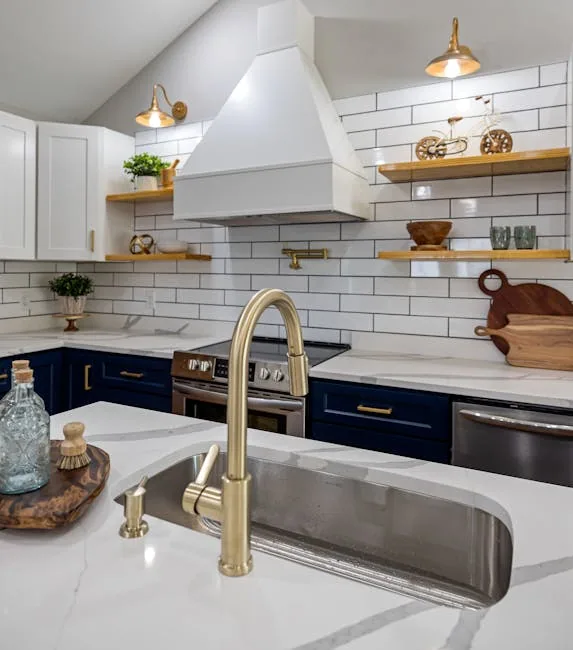
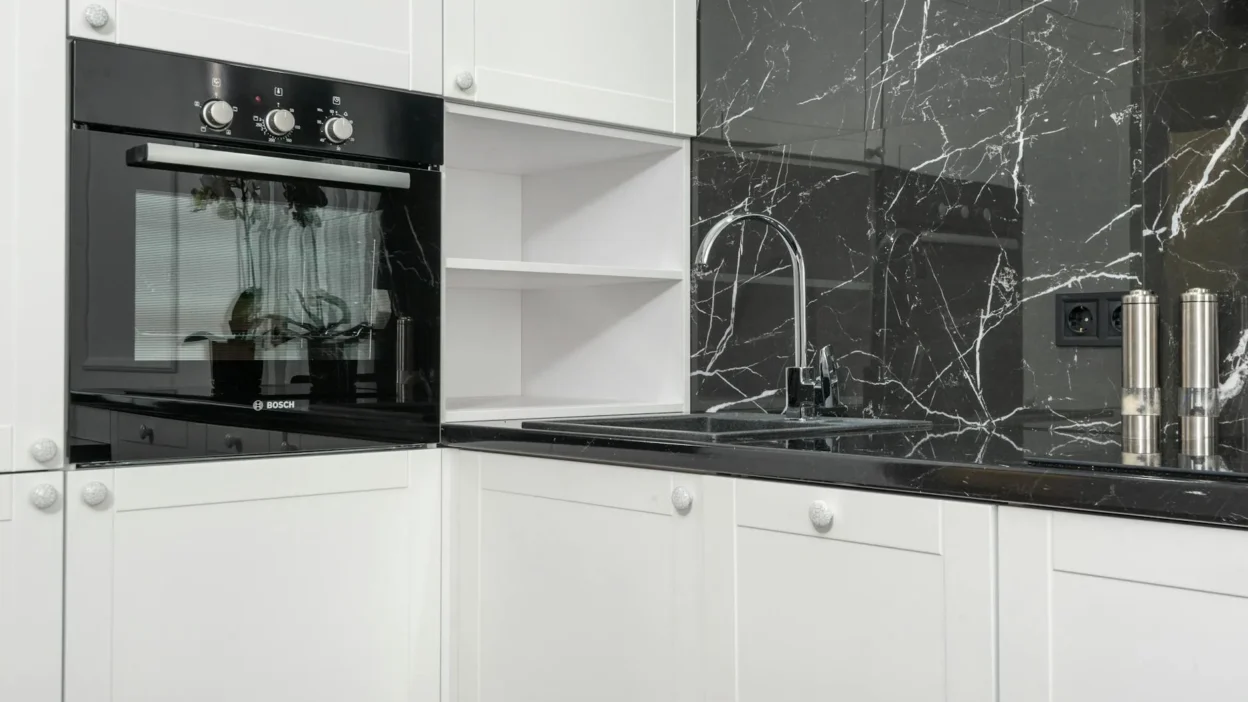
Photo by Curtis Adams on Pexels
The Modern White Kitchen
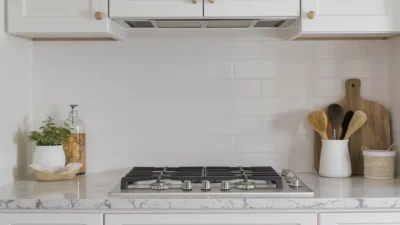
Challenge: White shaker cabinets can feel crisp but cold. Solution: Use matte black as your dominant finish (70%) on all cabinet hardware and the faucet. This adds bold, modern definition. Then, introduce warm brass as an accent (20%) on pendant lights over the island and again on the legs of bar stools. The black grounds the space, while the brass adds welcome warmth and repeats intentionally.
The Kitchen with Moody Blue Cabinets
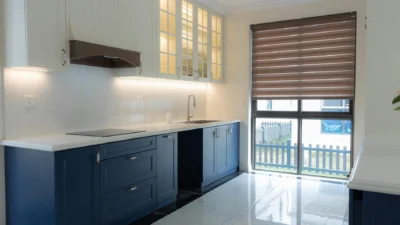
Challenge: Deep blue or green cabinets are rich but can be overwhelming. Solution: Make brushed gold or brass your dominant finish on hardware and faucet to complement the warmth in the cabinetry. Then, use polished chrome as a crisp, clean accent (10%) on your appliance handles and the trim of your range hood. The mix within the warm family (gold) with a hint of cool (chrome) feels sophisticated and balanced.
The Open-Plan Kitchen with an Island
Challenge: A large island becomes a focal point. Solution: Differentiate the island from the perimeter cabinets to give it visual weight. Use black hardware on the perimeter cabinets (dominant finish) and brass hardware on the island (accent finish). Carry the brass up to the pendant lights above the island. This creates a clear, stylish hierarchy that defines the space.
Common Finish-Mixing Mistakes (And How to Avoid Them)
Even with the best intentions, a few missteps can undermine your design. Being aware of these common kitchen hardware finish mistakes is half the battle.
Mistake: Using Too Many Finishes
The Pitfall: Introducing four or more different metals. This almost always looks chaotic and unintentional. The Fix: Limit yourself to two or three finishes max. Remember the hierarchy: one dominant, one secondary, and maybe one tiny accent.
Mistake: Ignoring Undertones and Styles
The Pitfall: Pairing a rustic, oil-rubbed bronze with a sleek, polished chrome without any other elements to bridge the style gap. The Fix: Ensure your finishes share a common language. If you’re mixing temperatures (warm and cool), make sure the styles are complementary—perhaps both are simple and modern. For more on material properties, resources like the Copper Development Association offer insights into metal characteristics.
Mistake: Scattering Accents Without Repetition
The Pitfall: One brass pendant light, one chrome faucet, one black knob—all alone. The Fix: This is where intentional repetition is non-negotiable. If you choose an accent finish, find at least one other spot for it to appear, creating a cohesive link.
Mistake: Forgetting About Appliances
The Pitfall: Not considering the finish of your large appliances (stainless steel refrigerator, black oven) as part of the mix. The Fix: Your appliance finish counts as one of your metals. If you have stainless steel appliances, you might treat that as your cool, neutral base and build your hardware choices around it.
Embrace the Mix with Confidence
Stepping away from the perfectly matched kitchen is a sign of a designed space, not a decorated one. It shows thought, layers, and personal investment. Remember, the goal isn’t to follow a rigid formula but to use simple principles—dominance, temperature, and repetition—as your guide.
If you’re feeling hesitant, start small. Try a two-finish combination first, like black hardware with brass lighting. Live with it, see how the light plays on the metals at different times of day, and build your confidence from there. Your kitchen should tell your story, and a thoughtful mix of finishes is a beautiful way to write the first chapter.