Do your kitchen countertops feel perpetually cluttered, dated, or just a little uninspired, even though they’re perfectly functional? You’re not alone. The countertop is the kitchen’s hardest-working surface, and it’s easy for it to become a catch-all for mail, small appliances, and daily detritus. But what if you could transform that central zone from a source of stress into a point of personal style—without the cost and chaos of a full remodel? That’s the power of strategic kitchen countertop styling updates. This isn’t about adding more stuff; it’s about intentional curation. Think of it as a design toolkit and a sustainable routine, where you learn to layer functional anchors, decorative objects, and clever surface details to create a space that feels both beautiful and uniquely yours. We’re moving beyond basic decluttering to explore the art of the vignette, the impact of material textures, and simple rituals to keep your surfaces looking fresh. Let’s reclaim your counters as a designed element of your home.
Kitchen countertop styling updates involve curating a mix of functional and decorative elements on a clean surface to create a fresh, personal, and organized look. The goal is to balance beauty with practicality, transforming your counters from a cluttered workspace into a styled focal point. It starts with a clean slate and an intentional approach to what earns a place on your surface, focusing on cohesion, scale, and visual interest rather than mere storage.
Your Countertop Styling Toolkit: The Essential Elements
Think of your countertop as a canvas. Before you create, you need to understand your tools. Successful kitchen surface styling isn’t about random knick-knacks; it’s the intentional curation of three core element categories. Mastering this toolkit is the first step to a cohesive and functional refresh.
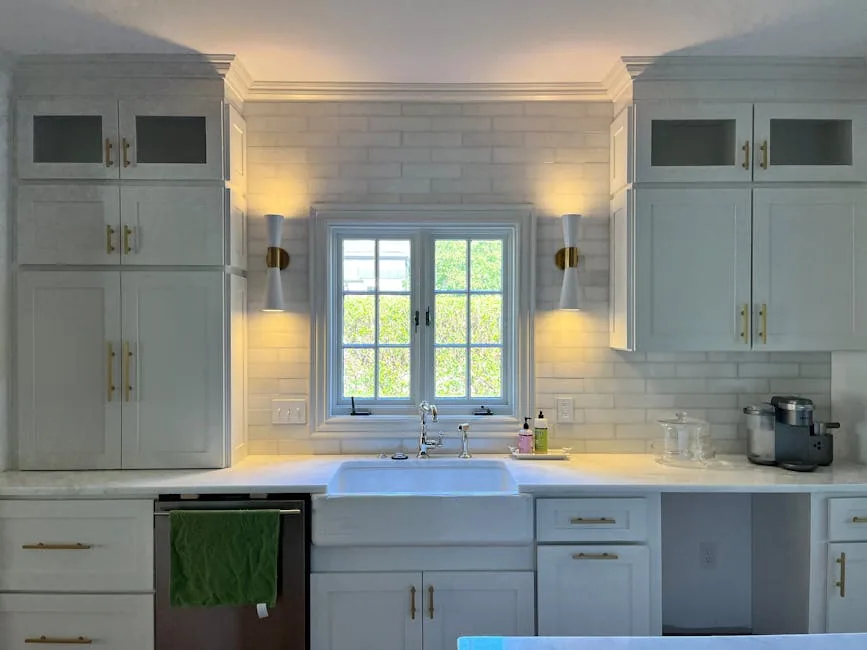
Photo by Alejandro Patat on Pexels
1. Functional Anchors
These are the non-negotiables—the items you use daily that deserve to be beautiful. They form the foundation of your arrangement. Think of a stylish ceramic utensil crock, a elegant olive oil bottle, a quality knife block, or a set of uniform canisters for flour and sugar. When chosen with design in mind, these items stop being clutter and start being intentional decor.
2. Decorative Layers
This is where personality shines through. Decorative layers add texture, color, and life. This category includes items like a small potted herb or succulent, a stack of beautiful cookbooks, a piece of art or a framed recipe leaning against the backsplash, a decorative bowl filled with citrus or neutral-toned objects, or a sculptural candle. Their primary role is visual interest, not daily function.
3. Surface Treatments & Textures
These elements act as a “layer” on the counter itself, adding depth and defining zones. A large wooden cutting board, a marble pastry slab, a woven tray, or a sleek metallic stand all function as mini-surfaces that break up the expanse of your countertop. They also protect the surface and make smaller items feel collected rather than scattered.
A key principle across all categories is scale and proportion. A tiny vase on a vast granite island will get lost, while an oversized fruit bowl on a narrow galley counter will feel oppressive. Always consider the size of your surface relative to the items you’re placing.
The Foundation: Clearing and Defining Your Surface Style
Here’s the common scenario: you’ve bravely cleared every last appliance, crumb, and miscellaneous item off your counters. You’re left with a clean, blank slate… and now a wave of uncertainty. The instinct is to just put things back. Resist it. This empty space is your opportunity to define a direction.
Start by honestly assessing your countertop’s inherent style. Is it a sleek, white quartz with a minimalist vibe? A warm, grainy butcher block radiating rustic charm? A dramatic veined marble calling for elegance? Your styling should complement, not fight, this base. A modern quartz surface might sing with a monochromatic scheme and metallic accents, while a rustic wood countertop becomes a perfect stage for organic textures like terra cotta, woven baskets, and live-edge cutting boards.
This step is the heart of a genuine countertop decor refresh. Instead of just moving old items around, you’re making a conscious choice about the vibe you want to cultivate. Ask yourself: “Do I want this space to feel serene and minimalist, lush and organic, or collected and personal?” Your answer will guide every subsequent choice from your toolkit.
The Art of the Vignette: Building Visual Interest
Now, for the magic: arrangement. Throwing your beautiful tools onto the counter haphazardly won’t create a styled look. The secret is in building intentional vignettes—small, curated groupings that tell a visual story. Let’s break down the essential dos and don’ts.
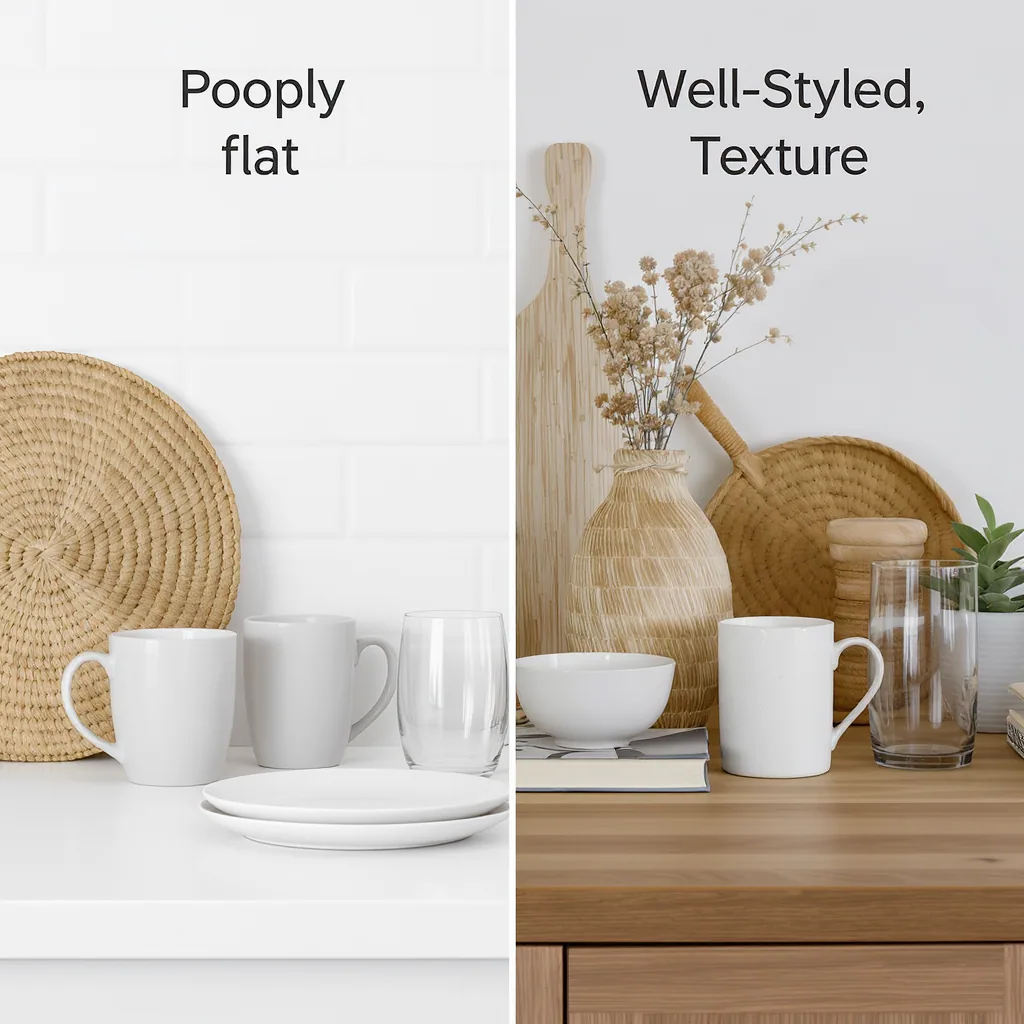
DO: Group items in odd numbers (three or five tend to be most pleasing to the eye). DO: Create a “triangle” of heights. For example, a tall lamp or vase, a medium-height stack of books with an object on top, and a low, trailing plant. DO: Mix materials and textures within a single vignette—combine the smoothness of ceramic, the warmth of wood, and the softness of greenery. DO: Use a tray or board as an anchor to corral smaller items and create a defined zone.
DON’T: Line items up in a straight, soldier-like row against the wall. It feels static and uninspired. DON’T: Use only one texture (e.g., all glossy white ceramics), which can feel flat and sterile. DON’T: Overcrowd the vignette. Leave “breathing room” around and between objects. DON’T: Forget the backdrop. A simple vignette against a beautiful tile backsplash has far more impact than one against a cluttered wall.
These countertop styling ideas transform your tools from a collection of objects into a composed scene. Practice by building one vignette at your sink corner or on the end of an island, then step back and assess.
Surface Detail Updates: Beyond the Decor
While decor sits on the surface, true transformation often involves considering the surface itself and its immediate context. These “hardscape” updates can have a dramatic impact, offering both permanent and temporary solutions for a comprehensive kitchen surface styling overhaul.
Backsplash Focus
The wall behind your counter is a prime styling asset. Updating a dated backsplash is a project with huge visual return. Current trends lean towards handmade zellige tiles for texture, large-format slabs for seamless modernity, or bold colored tiles for personality. Even a fresh coat of a durable, semi-gloss paint can act as a clean backdrop for your vignettes.
Edge Profiles and Integrated Features
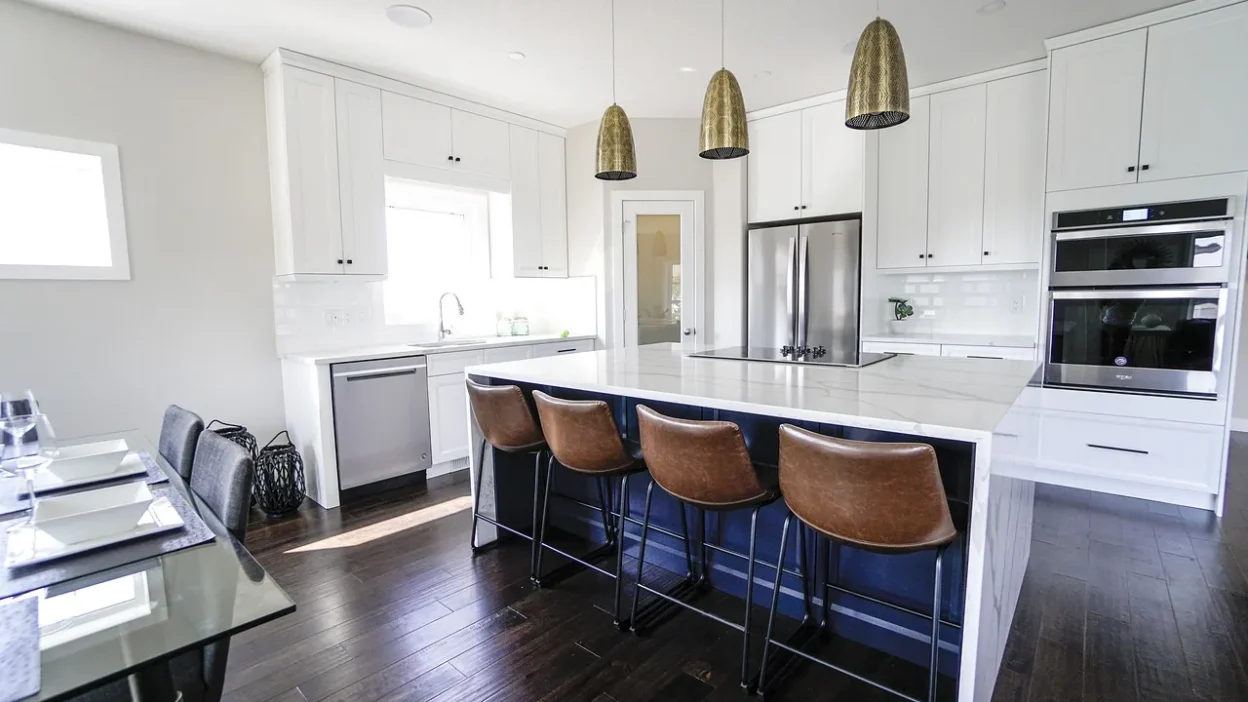
If you’re considering a countertop replacement, the edge profile is a critical detail. A thick, waterfall edge on an island makes a bold modern statement, while a ogee or bullnose edge lends traditional elegance. For a highly functional update, consider integrating a drainboard groove into a stone countertop next to the sink or specifying a dedicated section of butcher block for prep work.
Functional Layering
This is where your toolkit’s “surface treatments” become strategic updates. Using a large, beautiful cutting board as a permanent landing zone for fruit and bread essentially adds a new, warmer material to your counter. A sturdy tray can define a coffee station, protecting the surface and containing mugs and a grinder. These are zero-commitment ways to alter the look and feel of your countertop surface details.
The Maintenance Routine: Keeping Your Styled Counters Fresh
A beautiful countertop styling update is not a one-and-done event; it’s the start of a new, more intentional relationship with your kitchen. To prevent the slow creep of clutter and visual stagnation, adopt a simple, sustainable rhythm. Put your styling tools to use with this routine.
Daily: This is a 2-minute reset. As you clean the kitchen after dinner, wipe down surfaces and return every “toolkit” item to its intended home. Put away stray mail, appliances not used daily, and random debris. This maintains the baseline clarity you’ve worked to achieve.
Weekly: Take 5 minutes for a mini-refresh. Change the water in your vase, swap out the fruit in your bowl, rotate a different piece of art or cookbook into your vignette. Dust surfaces and trays. This light touch prevents your arrangement from becoming invisible background noise.
Seasonally: This is your permission to play. With the change in seasons, make more significant swaps. Exchange bright citrus for pinecones and evergreen in winter. Swap a heavy ceramic crock for a glass vase of fresh herbs in spring. This is the fun part—allowing your kitchen’s style to evolve naturally throughout the year, keeping the space feeling dynamic and personally relevant.
Start Your Countertop Transformation Today
The path from a cluttered workspace to a styled focal point is clearer now. You have the toolkit, the principles for arrangement, and even a routine to maintain the look. The only thing left is to begin. Don’t feel pressured to overhaul your entire kitchen at once. The most effective updates start small and build momentum. Choose one zone—the often-neglected corner by the sink, or the prime real estate on your island—and apply just one idea from this guide. Clear it, define its purpose, and build a single, intentional vignette. That first small victory is how an enjoyable design practice begins, transforming your kitchen’s heart one thoughtful surface at a time.