You fall in love with a set of ceramic canisters online. You order a bold, patterned runner for your island. The vintage-inspired pendant light arrives, and it’s perfect… until you put it all together in your actual kitchen. Suddenly, nothing works. The colors clash, the styles fight, and you’re left with a collection of individual pieces that feel disjointed and a budget that’s taken a hit. This common scenario is exactly why creating a kitchen decor mood board isn’t just a fun creative exercise—it’s an essential, low-stakes planning tool. It allows you to visualize your color palette, materials, and key fixtures as a cohesive whole before you spend a single dollar, transforming your kitchen decor mood board ideas from scattered inspiration into a confident, executable plan.
The best way to create a kitchen decor mood board is to start digitally, gathering inspiration for your color palette, materials, and key fixtures. Focus on balancing large elements like cabinets and countertops with smaller decor. The goal is to visualize the complete look and identify potential clashes before you spend any money, ensuring a cohesive and personalized kitchen design.
Why a Mood Board is Your Kitchen’s Best Friend (and What It’s Not)
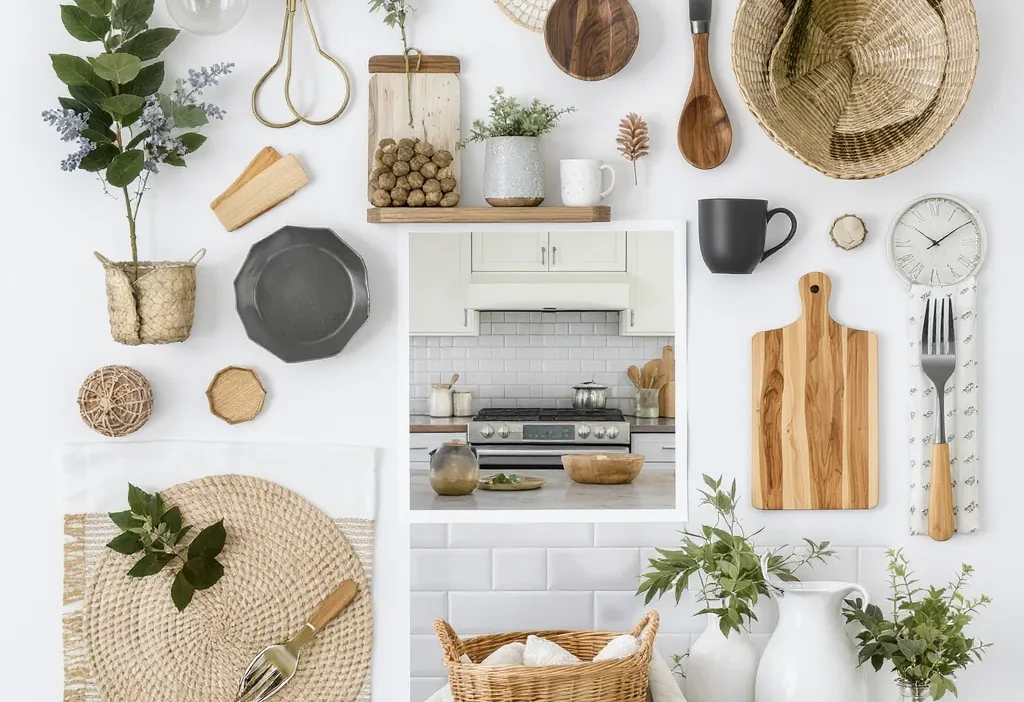
Think of a kitchen decor mood board as a low-stakes, high-reward rehearsal for your real-life kitchen. Its primary job isn’t to be a beautiful Pinterest collage (though it often ends up looking like one). Its real purpose is to be a practical decision-making tool that prevents you from buying a trendy terracotta tile only to realize it fights horribly with your warm oak cabinets. That’s the specific mistake it solves.
A functional kitchen design concept board forces you to see all your choices—paint swatches, cabinet finishes, hardware, lighting, and even that cute vase—in one place. This visual consolidation is where the magic happens. You stop thinking in isolated “I love this faucet” moments and start evaluating the complete ensemble. It transforms vague kitchen decor planning tips into a concrete, editable plan, saving you from the costly cycle of returns and regrets.
The 3 Biggest Mood Board Mistakes That Waste Your Budget
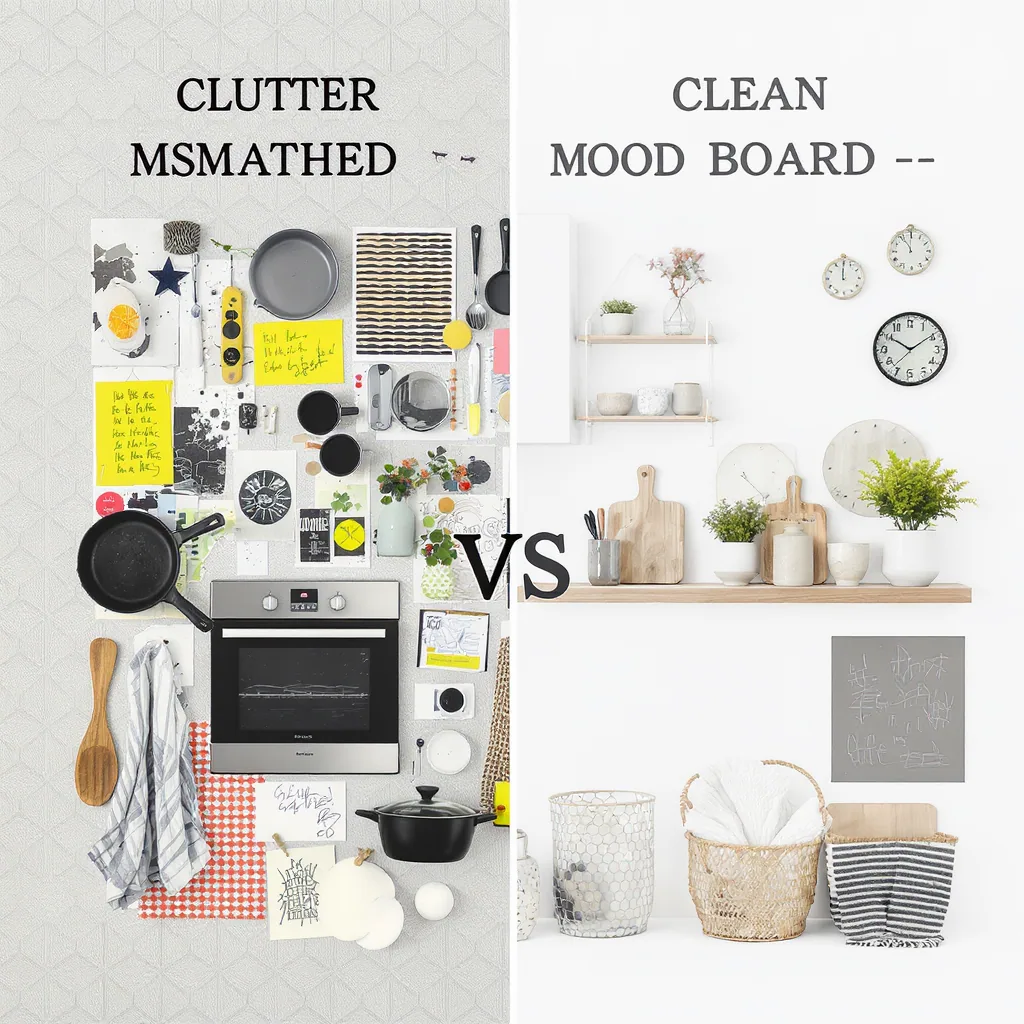
Even with the best intentions, it’s easy to build a board that leads you astray. Here are the key pitfalls to avoid in your kitchen mood board planning.
Don’t: Ignore scale and existing elements. Pinning a dozen close-ups of brass knobs tells you nothing about how they’ll look on your specific cabinet doors, or if they’ll feel dwarfed by your large-format island. Do: Always include samples or photos of your fixed elements first—your flooring, appliance colors, and any cabinetry you’re keeping. This creates a truthful foundation. Then, source images that show items in context, not just in isolation.
Don’t: Forget about lighting. That perfect sage green you pinned under bright studio lights can look murky and gray in your north-facing kitchen. Do: Note the natural and artificial light conditions of your actual space. Save paint and material samples under both daylight and your evening bulbs. This is a non-negotiable step in effective kitchen decor planning.
Don’t: Chase a literal theme. A “French Country” board crammed with roosters and toile can feel like a costume, not a home. Do: Focus on creating a cohesive style through a restrained color palette and material mix. Let a few thematic elements suggest the vibe, while the overall feeling comes from harmony, not repetition.
Your Action Plan: Building a Mood Board That Actually Works
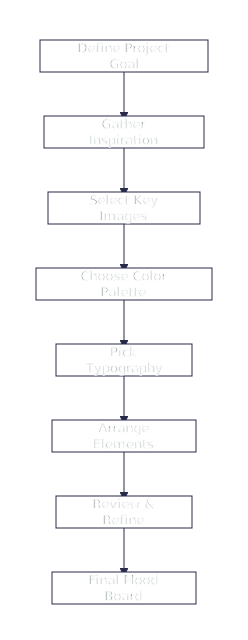
Follow this streamlined checklist to build a kitchen inspiration board that translates directly to a real-world space you’ll love.
- Define Your Core Style Words. Start with 3-5 adjectives. Are you going for “airy, minimalist, and organic” or “warm, collected, and textured”? This verbal anchor prevents style drift as you gather images.
- Gather Digital Inspiration. Create a dedicated Pinterest board or save folder. Don’t overthink it—pin anything that catches your eye. After 50+ pins, step back and look for patterns in color, material, and mood. This is your raw data.
- Select Your Anchor Pieces. Identify the 2-3 biggest, most expensive, or fixed items. This is usually your cabinet color and countertop material. These anchors dictate your entire palette. Find a real sample or a highly accurate photo for each.
- Build Your Color & Material Palette. Using your anchors, choose 1-2 primary colors, 1-2 secondary/accent colors, and 2-3 core materials (e.g., oak, marble, black steel). Limit yourself! A cohesive kitchen aesthetic planning relies on restraint.
- Add Decor, Hardware, and Lighting. Now layer in the details: cabinet pulls, faucet, light fixtures, barstools, and a few decor items. Ensure each new addition complements your established palette and materials.
- Step Back and Edit. Live with your board for a few days. Does anything feel off or redundant? Remove it. The goal is a balanced, intentional collection, not a crowded collage. Your board is done when removing any one item would diminish the whole.
From Board to Reality: Making Your Final Decisions
Your finished kitchen style board is now a powerful filter for every purchasing decision. See a pendant light you love? Hold it up to your board. Does it fit the material mix and scale? If yes, it’s a confident yes. If it clashes, you’ve saved yourself a headache.
This is also where you evaluate trade-offs. The board might show that the perfect rustic shelving bracket is slightly off your metal finish palette. Is the joy it brings worth the slight deviation? Sometimes, a beloved item can become a new anchor. The board is a guide, not a prison.
Finally, use your visualized plan to create a phased buying list. Tackle the big-ticket anchors first, then fill in with decor. This staggered approach keeps your budget and vision aligned. When you start buying, you’re not guessing—you’re executing a plan you’ve already seen and loved.
Trust Your Curated Vision
Creating a kitchen decor mood board is the ultimate act of low-risk, high-reward planning. It turns anxiety about costly mistakes into the confidence of a curated vision. You’ve already seen the finished look in your board, so moving forward with purchases—whether it’s paint, a new light fixture, or hardware—feels less like a gamble and more like the next logical step.
So, take that folder of saved inspiration and start building. Your future kitchen, and your wallet, will thank you for the rehearsal.