Imagine walking into a room where everyone is talking at once. Even if the words are pleasant, the overall effect is overwhelming, and you can’t focus on a single conversation. That’s often the exact feeling a busy kitchen counter creates. You’ve wiped it down, put things away, and yet it still feels visually noisy and cluttered. This common frustration stems from a pervasive design myth: that a clean counter is automatically a calm counter. In reality, visual clutter and physical mess are two different beasts. Your counters might look busy not because they’re dirty, but because the items on them are having a silent, chaotic argument over shape, color, and space. This article is your guide to diagnosing that visual noise and applying safer, editing-focused fixes that feel like a thoughtful refresh, not a ruthless purge.
Kitchen counters often look busy not because they’re dirty, but because too many items of different colors, shapes, and sizes are competing for attention in a small visual field. The safest fix is to edit like a curator, focusing on creating intentional blank space and grouping similar items together to reduce visual noise. This approach addresses the core styling mistakes that lead to a cluttered countertop appearance, transforming the space through perspective rather than just organization.
The Myth: ‘If It’s Clean, It Should Feel Calm’
You’ve wiped down every surface, put the dishes away, and yet your kitchen still feels visually overwhelming. This is the core myth we need to dismantle: physical cleanliness does not automatically equal visual calm. A counter can be spotless but still feel chaotic because of visual clutter—a separate issue entirely.
Visual clutter happens when too many items compete for your eye’s attention at once, creating a sense of busyness even in an otherwise tidy space. It’s less about dirt and more about design principles like visual weight (how much an object draws the eye), scale competition (items fighting for dominance), and pattern overload. Understanding this is the first step to fixing why your kitchen counters look busy without just cleaning them again.
The 3 Silent Culprits Making Your Counters Look Busy
Most kitchen counter styling mistakes boil down to a few key visual errors. Identifying these silent culprits is like diagnosing the source of noise in a room.
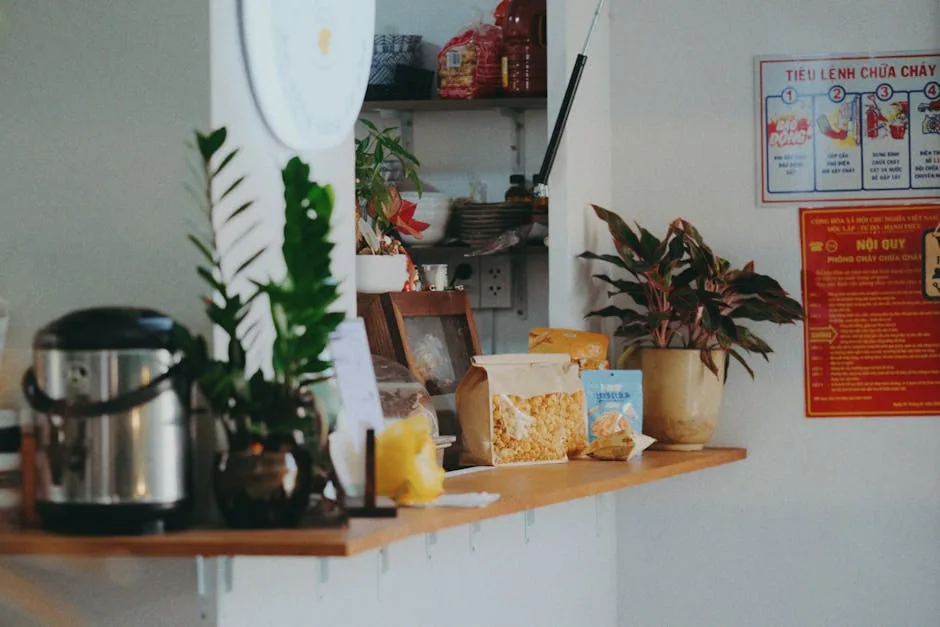
Photo by Pew Nguyen on Pexels
1. The Missing Anchor
Every calm vignette needs a focal point—one item that grounds the scene. Without it, your eye darts around trying to find a place to rest. This is often a medium-sized appliance, a beautiful canister, or a healthy plant. If everything is of equal visual importance, nothing feels intentional.
2. The Confetti Effect
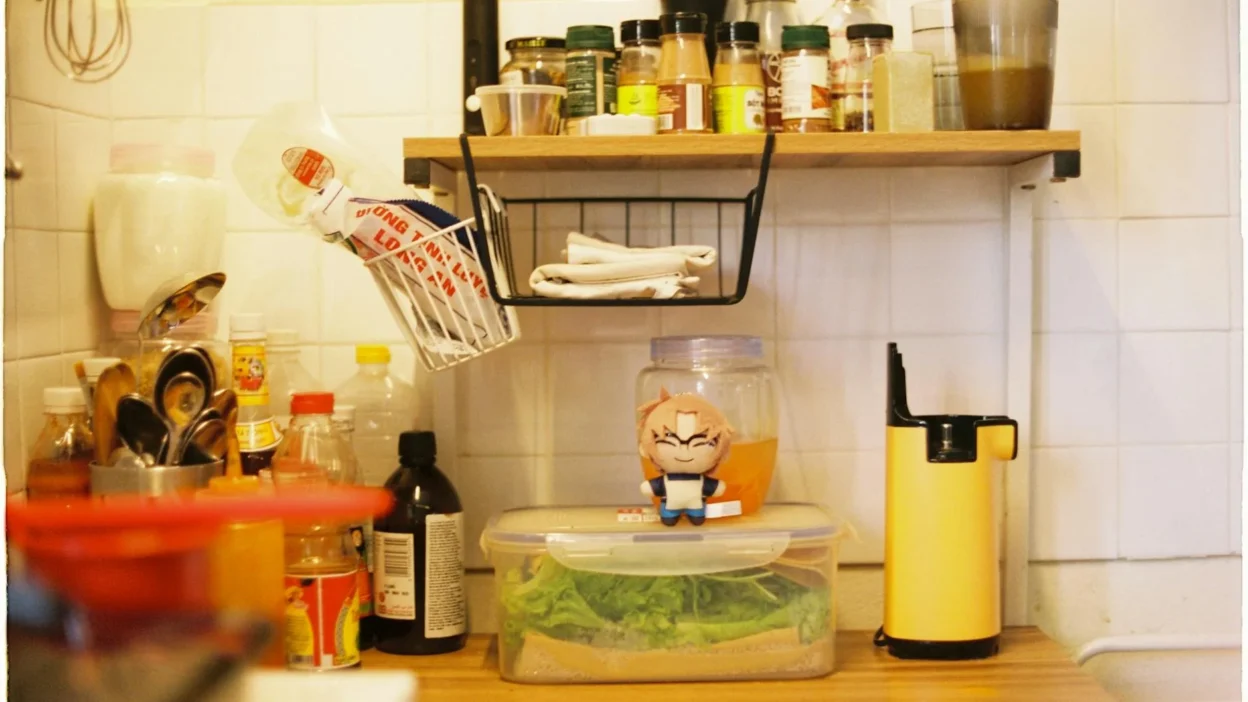
This is the biggest offender. It occurs when you have many small items in three or more different colors scattered across the surface. Think a red coffee tin, a blue soap bottle, a green sponge, and a yellow fruit bowl. Each pop of color acts like a visual “ping,” creating frantic energy. A unified color palette (even just neutrals with one accent) is far more soothing.
3. Height Chaos
When every item sits at roughly the same height (like a lineup of spice jars and small appliances), it creates a flat, crowded plane. Conversely, wildly different heights with no grouping can feel jarring and unstable. The goal is intentional variation: a low tray, a medium-height cooker, and a tall vase, for example, create a more dynamic and organized landscape.
Safer Editing Fixes (No Bin Bags Required)
Forget about drastic purges. The goal is thoughtful editing. Think of yourself as a curator, not a cleaner. The safest method is the “lift and layer” approach: clear everything off, then add items back with intention. This is how you truly simplify countertop decor.
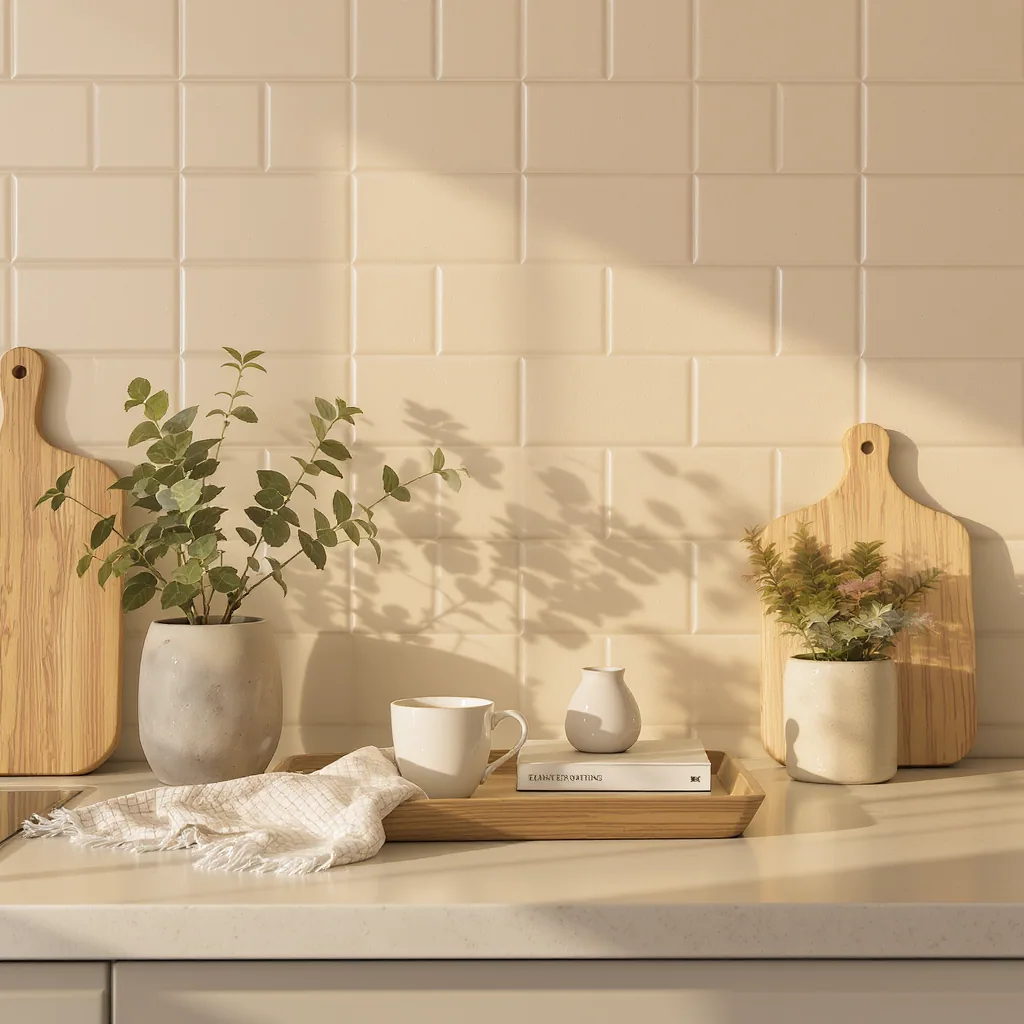
Start with a Clean Slate & Choose Your Anchor
Take everything off your counters. Wipe them down. Now, bring back the one or two items you use daily and love visually—your coffee maker or a beautiful knife block. This is your anchor. Place it intentionally, not just where it always was.
Group by Category & Corral with a Tray
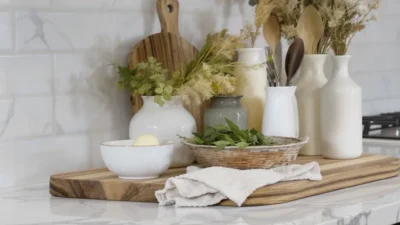
Instead of spreading out your oils and vinegars, group them together. Better yet, place the group on a tray or a small board. This instantly creates a single, composed “zone” out of multiple items, reducing visual noise on counters. A tray acts as a visual border, containing the clutter. For more inspiration on this powerful technique, see how professional organizers use trays on sites like Apartment Therapy.
Create Levels and Embrace Negative Space
Use a stand or a stack of cookbooks to give a plant or a canister some height. This creates pleasing layers. Most importantly, leave some blank countertop visible around your groupings. This negative space is not wasted; it’s the breathing room that makes the items you do have on display feel chosen and calm.
Common Stumbling Blocks & How to Sidestep Them
Even with the best intentions, it’s easy to get stuck. Here’s how to navigate the most common hurdles when editing your cluttered kitchen counters.
Over-Editing Into a Showroom
The Block: You remove so much that the space feels sterile and unusable, which isn’t sustainable.
The Sidestep: Remember, “edited” doesn’t mean “empty.” Always add back your true daily essentials. A used French press or a well-loved wooden spoon adds life. The goal is calm functionality, not a museum.
The Sentimental Item Paralysis
The Block: “But my child made this mug!” or “This was a gift!” Every item feels too precious to put away.
The Sidestep: You don’t have to discard sentimental items. Simply rotate them. Display that special mug for a week, then lovingly store it and bring out another meaningful piece. This keeps the space fresh and honors all your items.
Forgetting About “Flow”
The Block: You create a beautiful setup that then gets destroyed the first time you cook because it’s in your workflow.
The Sidestep: Edit with movement in mind. Keep the prime prep area clear. Group cooking staples (oil, salt, utensils) near the stove, not across the kitchen. Style should work with your habits, not against them.
Your Counter, Curated
A calm kitchen counter isn’t about achieving a perfect, static image. It’s about applying a gentle, editorial eye to reduce competition for your attention. By understanding the visual culprits and using the safer editing fixes—choosing an anchor, grouping items, and welcoming negative space—you shift from managing mess to crafting a space that feels intentionally yours.
Start with just one section tonight. Clear a corner, group two items together on a tray, and step back. Notice how that small act of curation, not just cleaning, changes how the entire room feels. That refreshed, quieter feeling is entirely within reach.